
You probably don’t think about the guy who makes sure your local station’s signal stays crisp, the tower lights never go dark, and the transmitter doesn’t blow up at 3 a.m. But the truth is, those folks are vanishing. As in, the people who used to keep radio stations alive are disappearing — and it’s starting to show up in FCC fines, broken towers, and silent stations nobody notices until it’s too late.
The Quiet Disappearance of the Chief Engineer
You grew up listening to the local radio station, probably tuned in to a favorite DJ or a catchy morning show. But behind that station’s smooth operation was a silent figure: the chief engineer. They weren’t celebrities. They weren’t on radio. They made sure the signal was clean, the antenna array was stable, and the emergency alert system was ready to blow when needed.
When equipment failed or the tower’s lights went out, it was the engineer who showed up, fixed the problem, and kept the station on air. Their work was invisible but essential. They knew every quirk of the transmitter, the ins and outs of the directional array, and the subtle signs that a component was about to fail. Without them, there might still be a station on the air — until suddenly it’s not.
What Happens When You Let Them Vanish?
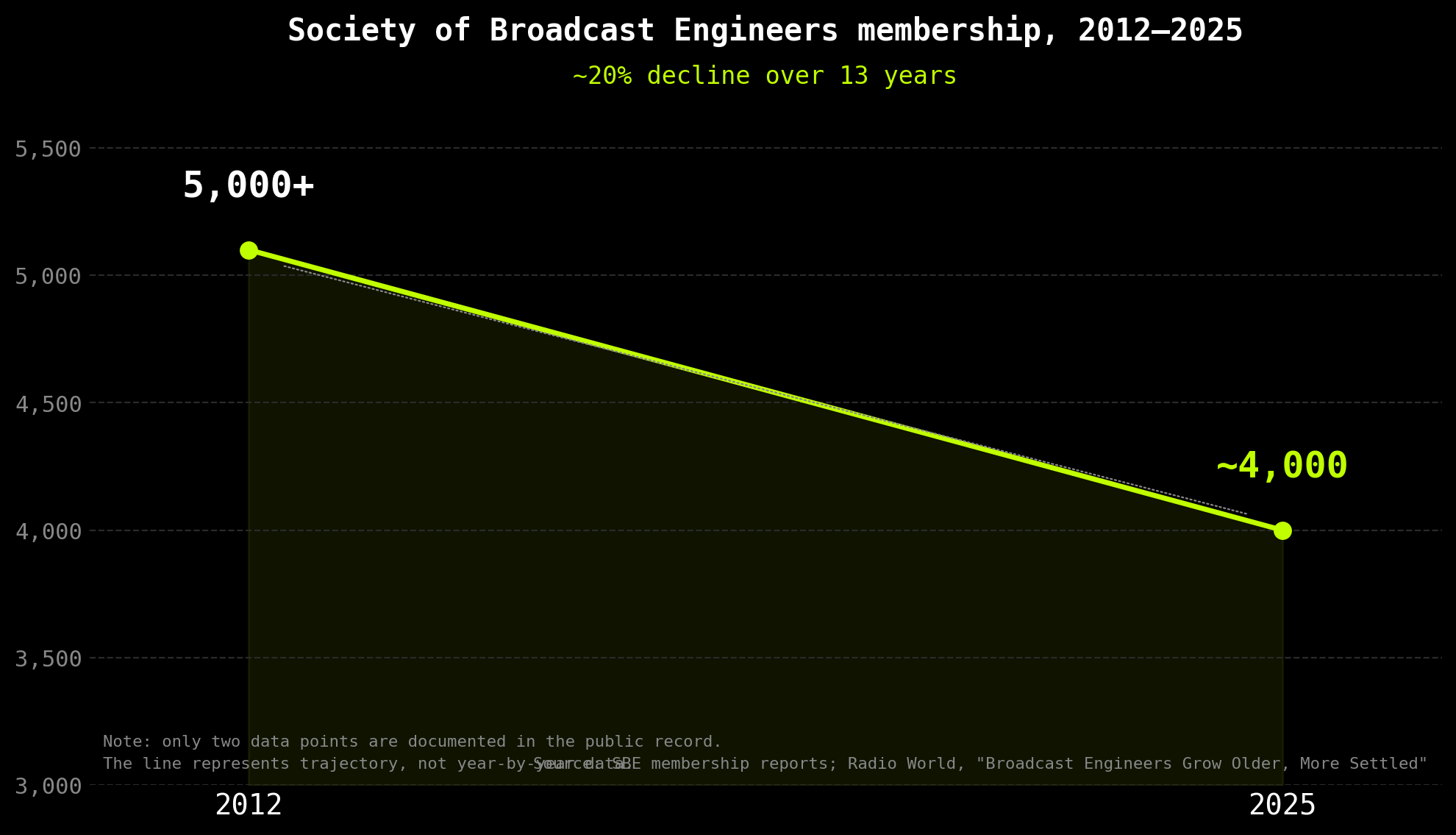
The trend over the last two decades is clear: fewer engineers, less hands-on maintenance, increasingly remote operations. The 2012 Society of Broadcast Engineers (SBE) had over 5,000 members. Today, they’re down to around 4,000. The average age of those remaining is pushing 60. That’s a red flag. The role of a dedicated, experienced broadcast engineer is shrinking.
Meanwhile, the industry started to cut costs long before anyone realized what was lost. The 1996 Telecom Act deregulated ownership limits, leading to giant radio conglomerates swallowing up hundreds of stations. They didn’t hire more engineers. They just added more stations per engineer. The result: regional clusters, remote monitoring centers, and “Tiger Teams” dispatched when something breaks. This model creates a dangerous blind spot.
The Cost of Monoculture and Remote Control
When a station’s engineer is no longer physically at the site, maintenance becomes reactive rather than proactive. Tower lights go unchecked for months, equipment ages without oversight, and critical systems like the emergency alert system are left to the last engineer’s last settings.
And those settings aren’t always correct. FCC enforcement cases from 2024 reveal silent stations, missed emergency tests, and giant fines for neglect. One Texas station missed multiple tests over years and got hit with a nearly $370,000 penalty. The cause? The staff simply didn’t know how or couldn’t respond because nobody was there to monitor or maintain.
Remote operations don’t replace local knowledge. They often exacerbate the problem. It’s like trusting a stranger to keep your house warm without ever checking if the furnace still works. When copper thefts, like the Oklahoma tower incident where a thief snipped a guy wire for less than a hundred bucks but caused half a million dollars in damage, happen — that’s the result of overlooking routine maintenance.
What’s Behind The Decline?
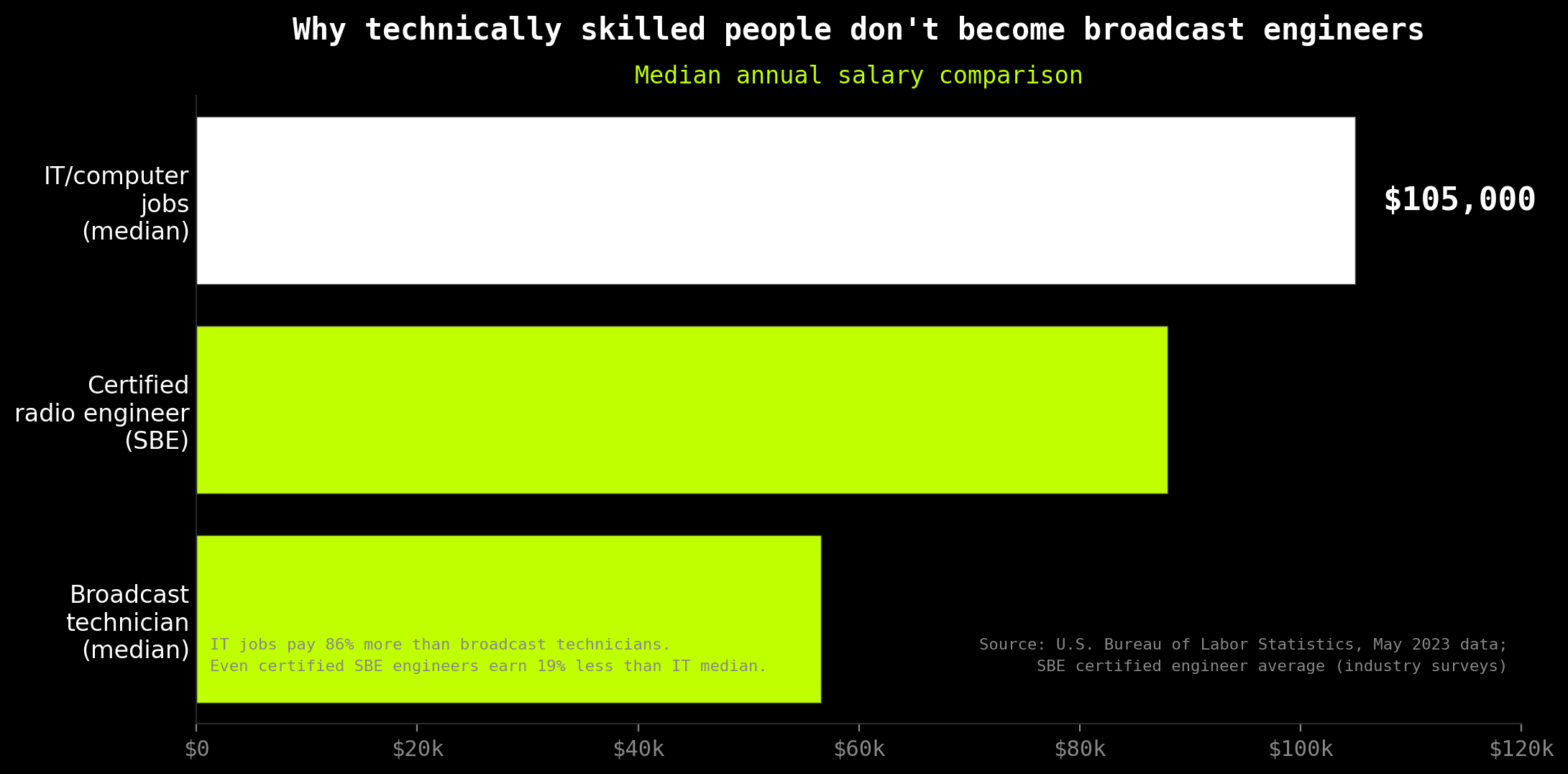
It all ties back to economics. The median wage for a broadcast technician is around $56,600. That’s less than an IT guy making six figures. Plus, the industry’s consolidation means fewer jobs for more stations, and those jobs are often regional or remote. The old hands — guys who knew how to fix a coil or reset a controller — are retiring or quitting because they’re not seeing a future in it.
And trying to replace them? It’s a math problem. The industry needs roughly 5,100 new engineers over the next decade to offset nearly the same number leaving. But funding for training programs is falling short. Alabama’s broadcasters run a free training program. Wake Forest in North Carolina is graduating a handful of new engineers each year. That’s good, but nowhere near enough.
The Human Side of Technical Decline
The real loss isn’t just a handful of technical specs or a missed EAS test. It’s the knowledge and pride that came with being a local, hands-on engineer. Knowing the quirks of your station’s transmitter, the weak spots in your tower, the tiny signs of impending failure. That knowledge isn’t stored in the cloud or a spreadsheet — it lives in the person who’s been showing up for a shift for three decades.
When they’re gone, there’s nobody to tell you that the fiber that connects the transmitter to the studio is 20 years old or that the grounding system has corroded through. That ignorance is now standard. FCC enforcement files from Michigan and Texas detail cases where simple tower maintenance was ignored, leading to fines and outages.
The Public Safety Consequences
Copper theft is only one side of the story. Forget about vandalism for a second. The bigger issue is the failure of systems designed for public safety. When a station’s tower light or emergency system is neglected, it’s not just a technical issue — it’s a safety hazard. The FCC can fine stations hundreds of thousands of dollars for missing tests, because they’re supposed to be prepared.
In one case, a station in Oklahoma lost its tower to copper thieves. The station was silent for months. The chain of failure: nobody was physically checking the site — a direct result of the industry’s shift away from on-site engineers.
The Future of Broadcast Engineering
This isn’t about nostalgia. It’s about recognizing that the broadcast engineer’s role has changed, but not disappeared. It’s still critical. Training programs exist, but funding and recognition are lacking. The industry needs to value and nurture those who keep the signals alive, or sooner or later, something will fall apart — literally.
The question isn’t just where the engineers went. It’s where they’re going to find replacement talent fast enough — and how they’re going to keep stations from silently vanishing, like that FCC case from 2024.
In the end, it’s the local engineer — the guy who knew where the problem was before anyone saw it — who kept the lights on. Once they’re gone, the silence might be deafening.