
In the ever-evolving world of podcasting, understanding how your listeners engage with your content can be a challenge. One crucial aspect that often goes unnoticed is the role of the RSS enclosure tag. In this post, I’ll dive into what this tag is, why it matters for podcasters, and how it shapes the way we measure success in this medium.
The Foundation of Podcasting: What Is the RSS Enclosure Tag?
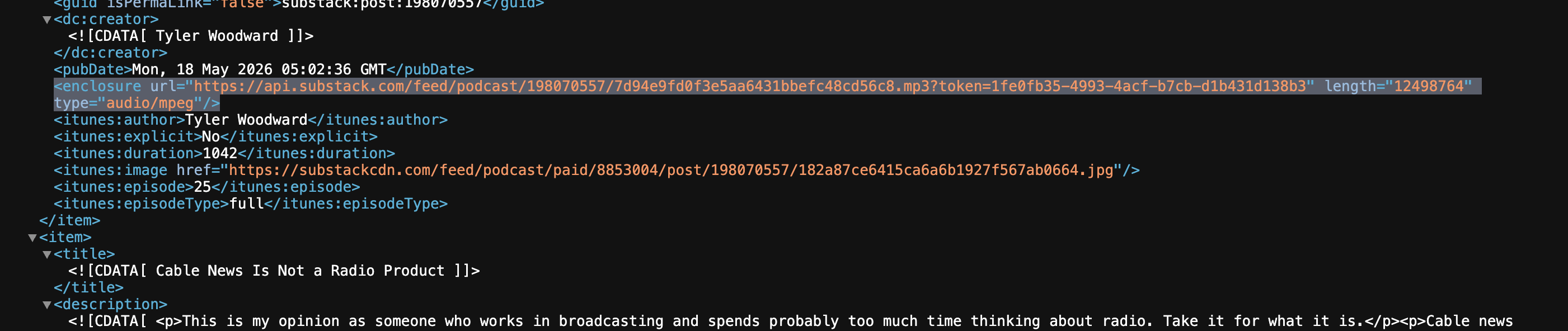
The RSS (Really Simple Syndication) enclosure tag is a pivotal element that enables audio files to be attached to podcast feeds. Introduced on December 25, 2000, by Dave Winer, this simple XML tag changed the landscape of content distribution. It allows a podcast episode to include a downloadable audio file, providing listeners with easy access to your content.

Why the Enclosure Tag Matters
- Accessibility: The enclosure tag is what allows users to subscribe to your podcast via apps like Apple Podcasts or Spotify. Without it, your audio files wouldn’t be easily distributed.
- Independence: Unlike platforms that host your content, the RSS feed gives you control over your distribution. Listeners subscribe directly to your feed, meaning that even if your show is removed from a platform, your audience can still access your episodes.
How Podcast Metrics Work: The Download Dilemma
One of the biggest challenges in podcasting is the measurement of listener engagement. A podcast download is merely an HTTP request to your server, which means it doesn’t necessarily indicate that someone actually listened to your episode. This vagueness has significant implications for podcasters trying to gauge their audience.
Understanding Download Counts
- What Counts as a Download? When a listener’s device requests your episode file, it’s counted as a download, regardless of whether they ever press play.
- Limitations of Current Metrics: Unlike other media, such as radio, where listener data can be collected through surveys and analytics, podcasting lacks robust measurement standards. This can lead to inflated numbers that don’t reflect actual engagement.
The Push for Better Metrics: The Role of the IAB TechLab
To address these challenges, the Interactive Advertising Bureau (IAB) Tech Lab introduced podcast measurement guidelines. These guidelines aim to improve the accuracy of podcast metrics through:
- De-duplication: Filtering out repeat downloads from the same IP address within a specified timeframe.
- Minimum Byte Threshold: Ensuring that downloads meet a certain size to eliminate bot traffic from the count.
- Certification Process: Podcasters can pay for certification to validate their metrics, which can be costly but may provide more accurate data.
The Spotify Experiment: A Cautionary Tale

Spotify’s ambitious attempt to dominate the podcasting space involved significant investments in exclusive content and measurement systems. However, their strategy faced challenges:
- Failed Exclusivity: High-profile shows, including Joe Rogan’s, moved away from exclusive agreements, signaling a shift back towards open distribution models.
- Control of Metrics: Spotify’s ownership of measurement platforms raised concerns about data transparency and the potential for biased reporting.
Why Open Standards Matter
Despite Spotify’s attempts to centralize podcasting metrics, the open nature of RSS remains crucial. It ensures that:
- Podcasters Retain Control: The independence of your feed means you can always reach your audience, regardless of platform changes.
- Transparent Metrics: If measurement tools remain open and accessible, podcasters can better understand their audience and improve their content.
Conclusion
Understanding the RSS enclosure tag and the nuances of podcast metrics is essential for any podcaster. While the industry continues to evolve, maintaining independence and transparency through open standards will ensure that creators can build sustainable audiences without relying on proprietary platforms.
Key Takeaways:
- The RSS enclosure tag is vital for podcast distribution and accessibility.
- Current measurement practices pose challenges for accurately gauging listener engagement.
- The push for better metrics through industry standards is essential for the growth of podcasting.
Want to dive deeper into the world of podcasting? Check out more insights and tips on my blog, subscribe for more below!